Ford Partners With Amazon For Dealers To Sell Used Vehicles Online
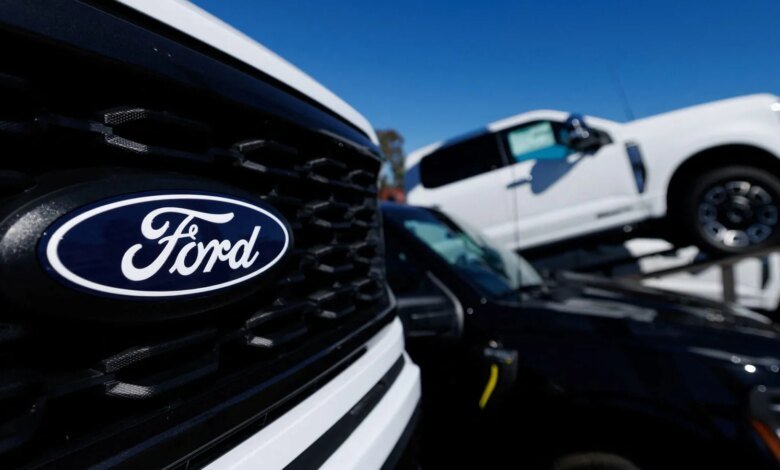
A Ford logo on a Ford F-150 pickup truck for sale in Encinitas, California, U.S. Oct.
20, 2025.
Mike Blake | Reuters
DETROIT —Ford Motoris partnering withAmazonto let the automaker’s franchised dealers sell certified preowned vehicles through the online retail giant.
The new program will allow customers to secure financing, start paperwork and schedule a pickup time for the vehicles at participating Ford dealers, the companies announced Monday. Some steps, such as a final signature, may still need to be completed in person, Ford said.
The deal comes two years after Amazon said it would allow auto dealers to sell cars through its site, starting with vehicles from South Korean automaker Hyundai.
The deals between Amazon and the two automakers differ, though, as Hyundai’s involves new vehicles rather than certified preowned. CPO vehicles are used but have been inspected, refurbished and certified by the manufacturer or dealer. They’re considered a better quality of used vehicles than cars without the designation and have warranties, like a new vehicle.
Amazon earlier this year also partnered with car rental companyHertzto sell used vehicles through its site.

Ford on Monday said than 160 of its roughly 2,900 U.S. retailers have “raised their hands” and started the process with Amazon. Thus far, about a dozen have fully onboarded and launched, with about 10 launching next week, the company said.
“The addition of Ford certified pre-owned vehicles to Amazon Autos represents an exciting expansion of our store, giving customers access to thousands of quality vehicles backed by Ford’s comprehensive inspection and warranty programs,” Fan Jin, global leader of Amazon Autos, said in a release.
Ford said it will offer a 14-day or 1,000-mile money-back guarantee, whichever comes first, on vehicles sold through the Amazon tie-up. The automaker also will offer three CPO certification levels of vehicles, with varying warranty coverages.
Ford said CPO vehicles are now available on Amazon Autos in Los Angeles, Seattle and Dallas, with plans to expand to additional cities in the coming months.
With Amazon’s partnerships with Hyundai and Ford, the franchised dealer is still the end seller. Traditional automakers have complex relationships with dealers that are backed in many states by laws that make it difficult or illegal to bypass franchised dealers and sell new vehicles directly to consumers.
There are less stringent laws regarding used vehicle sales, which makes it easier for companies such asCaravanaHertz and others to sell preowned cars and trucks online directly to consumers.
Disclaimer: This news article has been republished exactly as it appeared on its original source, without any modification. We do not take any responsibility for its content, which remains solely the responsibility of the original publisher.
Disclaimer: This news article has been republished exactly as it appeared on its original source, without any modification.
We do not take any responsibility for its content, which remains solely the responsibility of the original publisher.
Author: uaetodaynews
Published on: 2025-11-17 22:04:00
Source: uaetodaynews.com